The Garden Of Life

There are moments in life when an ordinary object becomes a portal to the past.

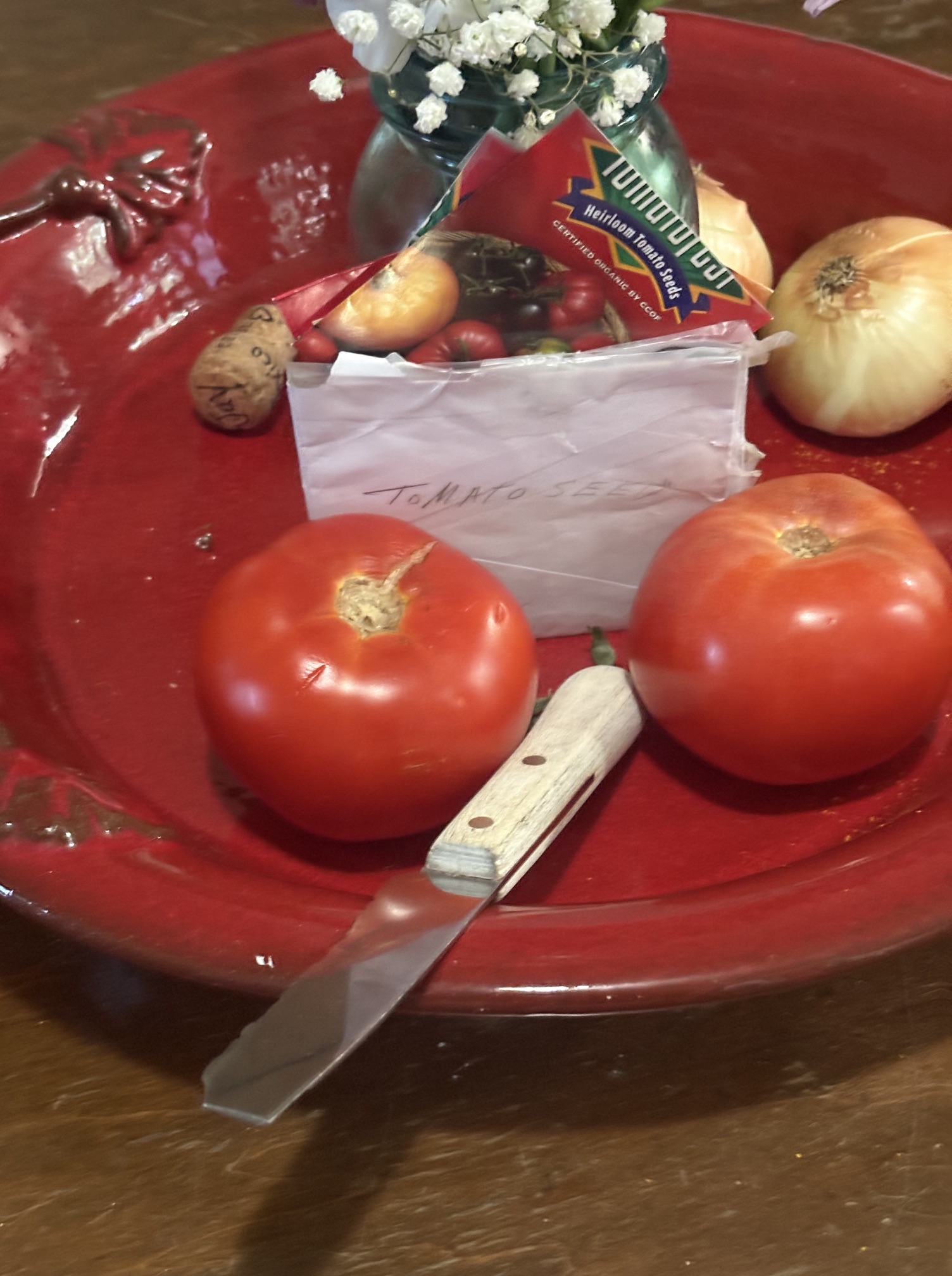
As we packed up my dad’s house after he left it, every drawer and cabinet seemed to hold a story. Some brought smiles, others tears. Tucked quietly in a drawer, we found a small packet of tomato seeds. They weren’t anything extraordinary to anyone else, but to us they represented hope. Dad had set them aside, already planning next year’s garden. Even though he would never plant them, he believed there would be another spring.

A few minutes later, while still cleaning out the kitchen drawers, my eyes landed on something that stopped me in my tracks.

It was my mom’s old tomato knife.

The faded wooden handle has been worn smooth by decades of her loving hands. The blade carried its own history, with the tip broken off years ago. We laughed because that broken tip never stopped mom from using it. To her, it wasn’t broken—it was still useful. Perhaps she was too sentimentality attached to that knife, like I am now. Every summer it sliced through vine-ripened tomatoes fresh from dad’s garden, destined for thick BLTs with crispy bacon, fresh lettuce, and just enough mayonnaise to drip onto our plates, or braunschweiger on hearty rye with mustard, or my mom’s wonderful simple summer salads.

The moment I wrapped my hand around that familiar handle, I wasn’t standing in a near empty house anymore. I was transported back to when I was a young preteen.

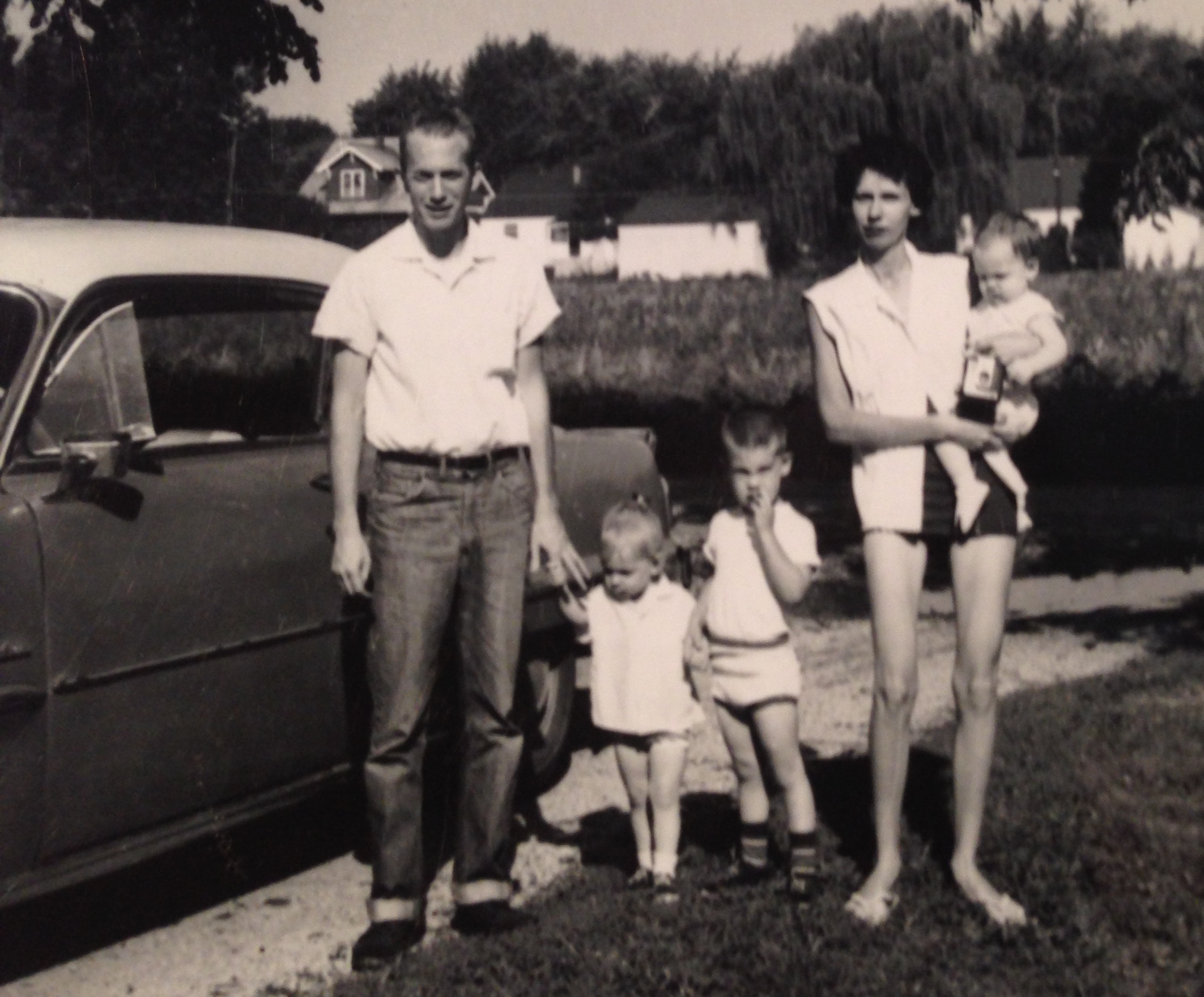
The windows were open. The smell of tomatoes, fresh-cut grass, and warm summer air drifted through the kitchen. Mom stood at the counter humming while she sliced tomatoes so perfectly red they barely needed seasoning. She had just hung the laundry out on the clothesline and was now making a quick lunch.  Dad had already been outside since early morning, mowing the yard and proudly tending the rows of plants. His tomato plants were his pride. Every ripe tomato carried hours of weeding, watering, staking, and patient waiting. He delighted in sharing them with neighbors and family.  Watching him walk the garden, inspecting every vine, was like watching an artist admire his masterpiece.

As I thought about dad’s garden, my mind wandered even further back—to the stories my mom had talked about her daddy, who she lost when she was 19 years of age.

During the 1940s, millions of Americans planted what were called Victory Gardens. The government encouraged families to grow fruits and vegetables at home so commercially grown food could be directed toward the troops during World War II. Posters, radio broadcasts, and newspaper campaigns urged citizens to “Grow Your Own,” making Victory Gardens both a practical effort and a powerful symbol of patriotism. While the campaign certainly served as wartime propaganda, it also inspired families to become more self-sufficient and brought communities together through gardening.

My mom never cared much about the politics behind it. What she remembered was her daddy’s garden.

She spoke about it with unmistakable pride—the neat rows, the harvest, and the satisfaction of knowing that every tomato, bean, and carrot came from his own hard work. To her, the Victory Garden wasn’t about government posters or slogans. It was about family, perseverance, and the joy of putting food on the table that had been grown with love.

Looking back now, I realize that gardening has quietly connected the generations of our family.

My grandfather nurtured his Victory Garden.

My father tended his tomatoes in the summer.

Now, another chapter is beginning. My grandson is buying the very home in Shiloh where I spent the best years of my youth.

Before he has even moved in, Dylan has already made the place his own. Like his great-grandfather and grandfather, he enjoys gardening.  He has filled planters with tomato plants, carefully tending them with the same excitement I remember seeing in dad’s eyes. These plants were the first things Dylan carried to his new home.

Some people might call that coincidence.  I call it inheritance.

Not the kind measured in dollars or deeds, but in traditions.

In patience.

In dirty hands.

In sweltering summer afternoons.

In tomato sandwiches eaten standing in the kitchen.

In a broken knife that was never replaced because it had already become part of the family.

The packet of seeds dad never got to plant reminds me that not every seed grows in the season we expect. Sometimes the harvest comes through the people who follow us.
As one generation leaves, another quietly kneels in the soil, presses a tiny seed into the earth, and believes in another summer.

And somehow, through tomato vines stretching toward the sun, through old recipes and familiar laughter, through gardens planted by hands young and old, our family story continues to grow.

Just like mom and dad always hoped it would.


Donna Heatherly

July 2026
The Decline

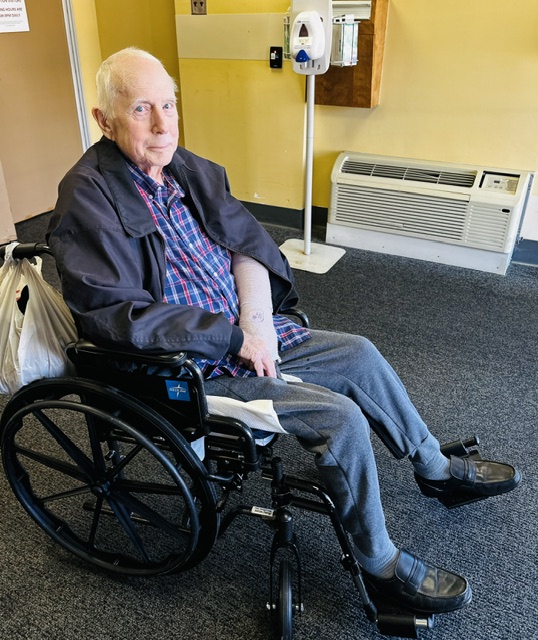
At 91, my dad still carries himself like a man ten years younger. His clothing always wrinkle-free, (he never would wear sweat pants in public), and he routinely goes to the barber for his handsome white hair.  As children, he and mom (mostly mom) would look us over, top to bottom anytime we were headed out the door to some event, making sure we had no stray threads, lint, rips, etc. He walks with quiet confidence, although more cautiously, with a slower gait and a bit of a limp. His memory has always amazed us all.  He can carry a story about his childhood, past jobs, friends, family, vacations, music trivia. He is a treasured gem, and he relishes all the holidays, pool parties, barbecues and various celebrations in our family as much as we cherish him.

Then came the fall. A broken hip and wrist. Just because of a cramp in his leg causing him to jump out of his recliner, losing his balance on the slippery hardwood floor. He had his cell phone in his pocket. Apparently, in his infinite wisdom, he had been carrying it on his person the past months as a precautionary act.

When we discovered him on the floor in pain, he knew he had broken bones. While my sister called for an ambulance, he said to me “Well that’s it, I guess I’m going into the home now”, as a single tear escaped and rolled down his cheek. “Might as well just shoot me.”

We had many twilight zone moments at the beginning, spending hours in the ER and ICU, helicopter and ambulance rides back-and-forth from Memorial and Barnes hospitals with major worrisome setbacks of pneumonia and sepsis. The entire time his optimistic spirit would not allow him to give up.

Rehabilitation followed, then exhaustion, then something far crueler—his appetite disappearing along with pieces of himself. The man who once relished hearty meals now pushed food around a tray with weakened hands. He chews on a piece of meat for a minute and still can’t bring himself to swallow it. He wants to be home. That is his goal.

His clothes hang as loose as his thin skin. His shoulders are sparrow narrow. His legs have become his enemies as he struggles to stand.  The only thing that remains the same are his bright blue eyes, however they have darkened like an April storm, as he drifts somewhere farther away each week.

And still, somehow, he worries about how he looks. He catches his reflection and laughs softly, embarrassed by the state of his unshaven face, hair in need of a cut, or wrinkled hospital gown. That hurts almost more than the decline itself. He spent his whole life taking pride in who he was, and now even dignity feels difficult to hold onto.

I remain encouraged, but deep down I see the end is nearing. I try to squelch those thoughts, but they continually skim the surface. And he knows it too.  It is heart wrenching watching the first man I ever loved, whose empathic personality protected my feelings as a child, whose sage wisdom came to my aid with advice as a teen, (most of which I accepted with snarky rolling eyes), and has been a constant my entire adult life, collapse into frailty.

The assisted living center is kind, but it is impossible not to notice the quiet surrender that lives there. Walkers line the hallways. Television voices echo from half-open doors. My father takes prides in the 150 steps he can complete in physical therapy or riding a little foot bicycle in the gym at the assisted living center. Trimming his own fingernails feels like a big win.

He is hopeful that once he gets back home, he will be happier when back to his normal routine, will be able to walk on his own in a few months. However, he’s also a realist, and he knows he will never be as strong again.

As much discomfort and worry he has been dealing with, he still asks about my day. And then the conversation goes back to the “slop” they serve at the care center, how he “eats just enough to stay alive”.   Even the food we bring in from our homes or restaurants does not taste good to him.  His potassium has dropped dangerously low so he was readmitted to hospital for infusions.

24/7 in a hospital bed for two months makes the mind wander, and as a problem solver, he has had much time to reflect. The other day he made the decision. He said he does not want to go back to the house he lived in for 56 years, saying “If I go back there, it will just be harder for me to leave again.”  As he said those words, and accepted his fate, his sentimental eyes welled up. It broke my heart to hear those words, to witness the beginning of the loss of his independence. All I could do was tell him it was a smart choice as I kissed the top of his head.

Each time I sit with him, as we are both transitioning his new lifestyle in his new studio apartment at The Colonnades, I am mourning the father I miss while loving the man who remains. And somewhere between grief and gratitude, I am learning that even as the body fails, love does not.

Donna Heatherly